Vegetation Management
Tulloch Reservoir Vegetation Management
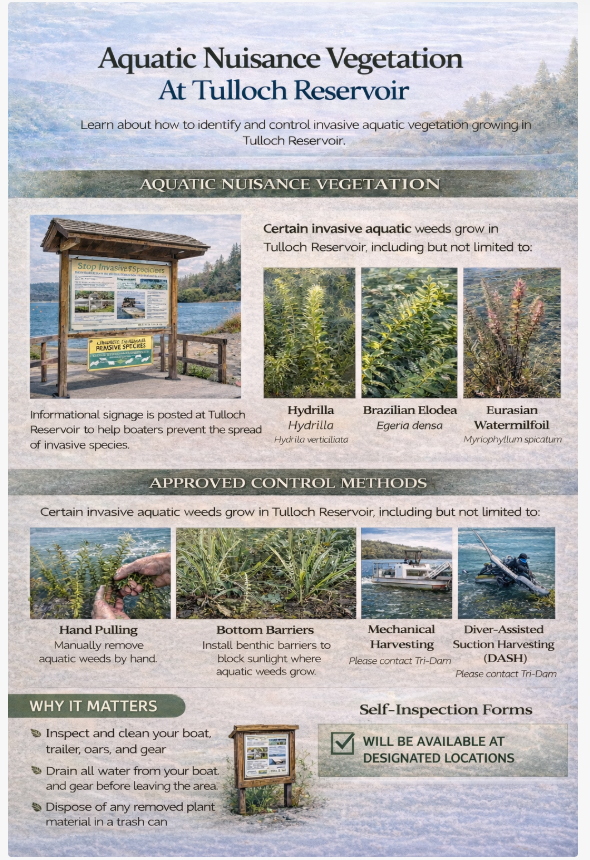
As part of the project license requirements, Tri-Dam implements vegetation management programs to monitor and manage both terrestrial noxious weeds and aquatic nuisance vegetation within the project boundary.
The purpose of these efforts is to:
• Protect recreation and navigation on the reservoir
• Prevent the spread of invasive plant species
• Provide guidance on approved vegetation management techniques
Informational Signage at Tulloch Reservoir
Informational signage is posted at boat launch facilities throughout Tulloch Reservoir to help educate visitors about invasive species and prevention practices. Visitors are encouraged to review this information and remove aquatic vegetation from boats, trailers, and equipment before launching and after leaving the reservoir.
Tulloch Vegetation Management Brochure 2026.pdf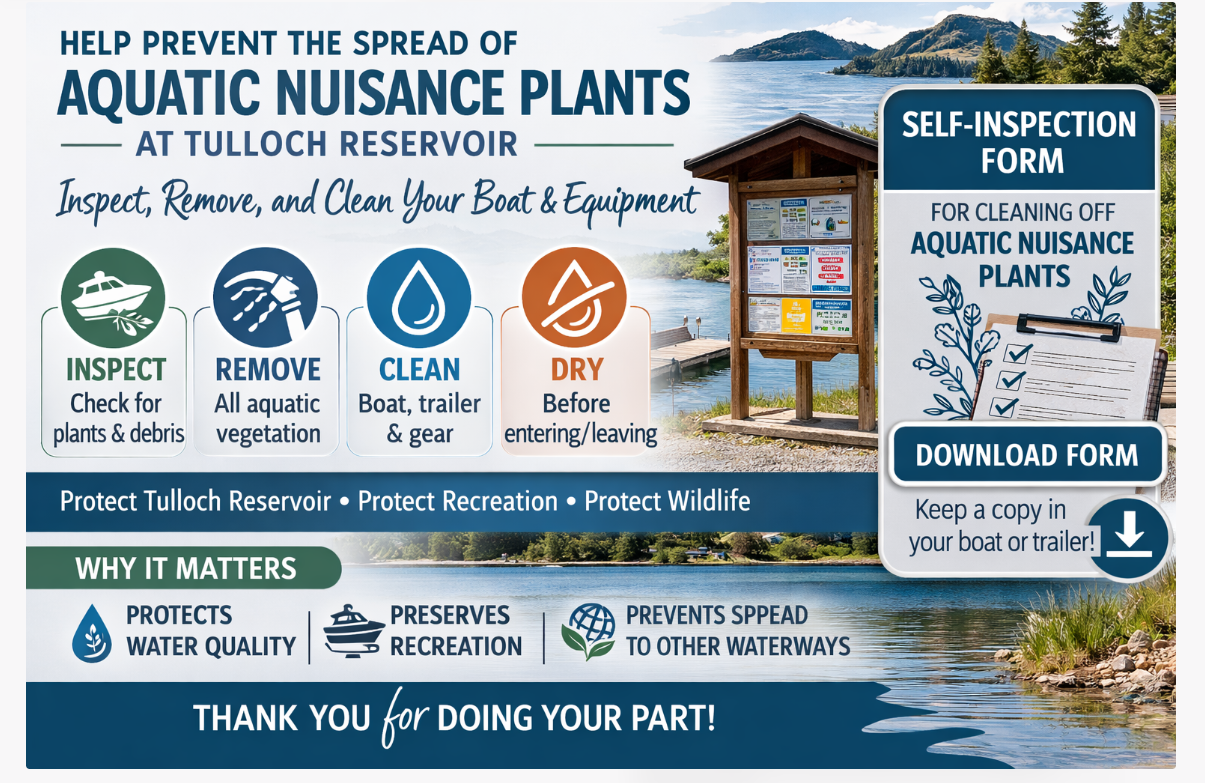
Approved Aquatic Vegetation Management Methods
The following management methods may be used to control aquatic vegetation in developed shoreline areas when appropriate. See below for the application form.
Hand Pulling (No Permit Required)
Hand pulling may be used to remove aquatic vegetation in small areas or confined spaces where other methods are not practical. Plants should be carefully removed from the root base and contained to prevent fragments from spreading. (Hand-pulling of aquatic weeds that does not involve excavation, mechanized equipment, or disturbance of the shoreline or lakebed generally does not require a Tri-Dam permit. Activities must be limited to manual removal only and all plant material must be removed from the reservoir and properly disposed of upland.)
Permit Application Required:
2026 Application TDP Vegetation Management.pdf- Bottom Barriers (Permit Required, See below for application) Bottom barriers consist of specialized fabric placed on the lakebed to block sunlight and prevent plant growth. These barriers require monitoring to ensure sediment does not accumulate on the barrier surface. The mats are limited to an area not to exceed 800 square feet, and to those areas under docks and/or navigation channel areas to enhance the navigability of the subject property. Vegetation along the shoreline is to be preserved. The purposed barriers must stay within the subject property boundaries, and the managed area is at the sole discretion of Tri-Dam. Please note that the installation or modification of any facilities, including bottom barrier mats, within the FERC project boundary (the 515’ elevation contour and below) requires the approval from Tri-Dam Project, and the issuance of a Tulloch Encroachment Permit. The permit application fee is $300 per property. Tri-Dam Project does not supply the bottom barrier mats.
- Mechanical Harvesting (Permit Required, See below for application) Mechanical harvesting uses equipment to cut aquatic vegetation below the water surface. This method may be used in larger areas where plant growth is more extensive.
- Diver-Assisted Suction Harvesting (DASH) (Permit Required, See below for application) Diver-Assisted Suction Harvesting uses a diver-operated suction system to remove plants directly from the lakebed. This method removes plants at the root base while collecting plant fragments through a suction hose.
Public Awareness and Prevention
Invasive aquatic plants can spread when small plant fragments attach to boats, trailers, anchors, fishing gear, and other equipment. Reservoir visitors can help prevent the spread of invasive species by following simple practices:
• Inspect boats and trailers for aquatic vegetation
• Remove all plant material before launching or leaving the reservoir
• Clean equipment after use
• Avoid transporting plants between water bodies
Click below for a Vegetation Management Plan Brochure for more information.
Terrestrial Noxious Weeds
Terrestrial noxious weeds grow on land within and around the reservoir shoreline and are different from aquatic vegetation found in the water. These plants can spread rapidly, compete with native vegetation, and impact wildlife habitat if not properly managed.
Common Terrestrial Noxious Weeds
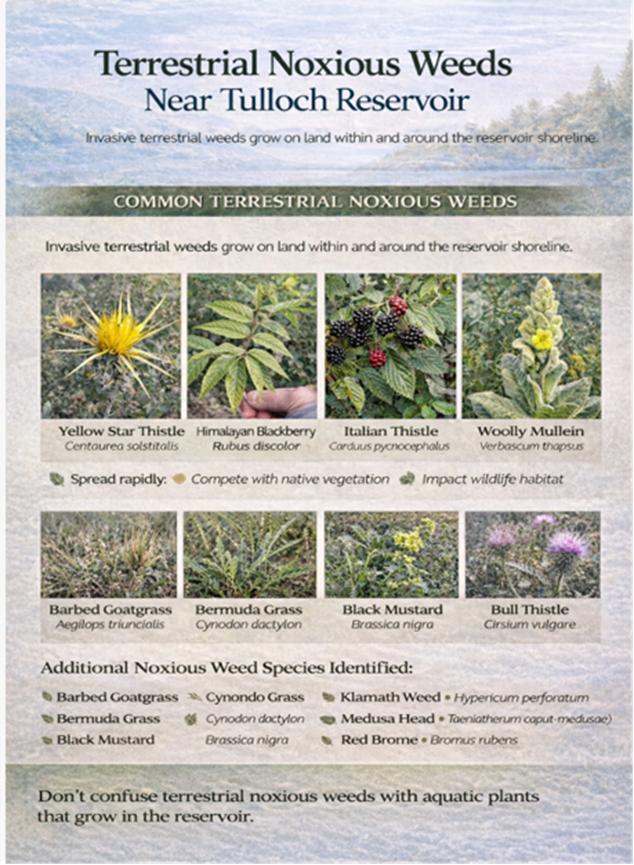
• Yellow Star Thistle (Centaurea solstitialis)
• Himalayan Blackberry (Rubus discolor)
• Italian Thistle (Carduus pycnocephalus)
• Woolly Mullein (Verbascum thapsus)
Additional Noxious Weed Species Identified
The following species have also been identified as noxious weeds within the project area:
• Barbed Goatgrass (Aegilops triuncialis)
• Bermuda Grass (Cynodon dactylon)
• Black Mustard (Brassica nigra)
• Bull Thistle (Cirsium vulgare)
• Klamath Weed (Hypericum perforatum)
• Medusa Head (Taeniatherum caput-medusae)
• Red Brome (Bromus rubens)
Aquatic Nuisance Vegetation
Aquatic nuisance vegetation refers to non-native plant species that grow within the reservoir and may interfere with recreation, navigation, or reservoir operations.
The primary aquatic nuisance plant species identified in Tulloch Reservoir include:
• Eurasian Watermilfoil (Myriophyllum spicatum)
• Brazilian Elodea (Egeria densa)